
Ambleford
Unboxing Education
Discover The Ambleford Approach
A Scandinavian-inspired approach to education built around deep relationships, academic purpose, outdoor learning and the belief that childhood should be both meaningful and joyful.
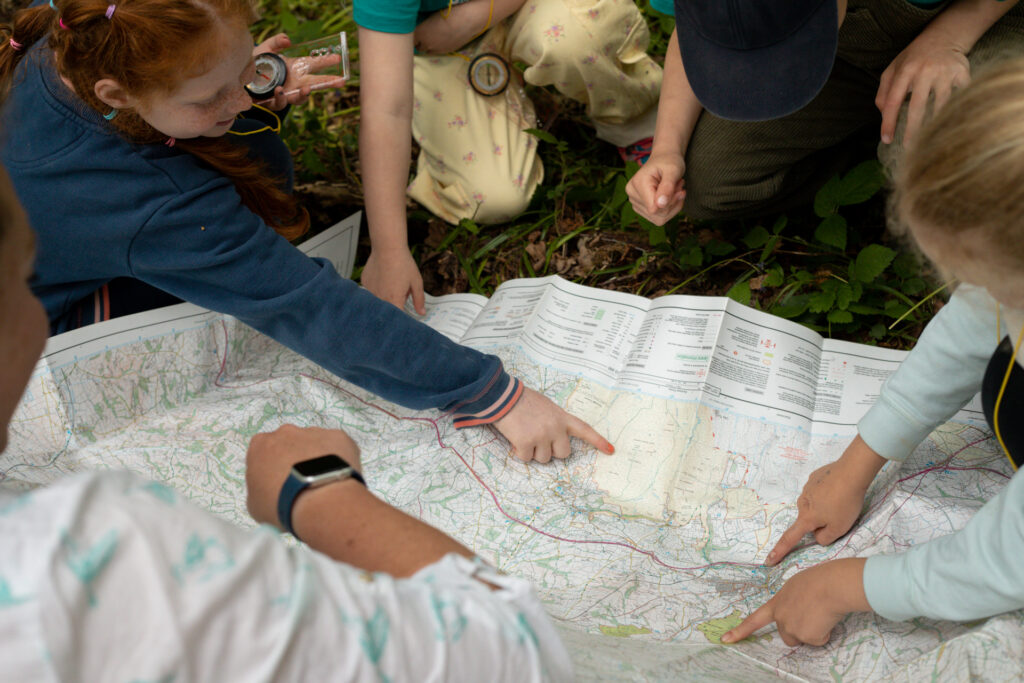
Education beyond the box
At Ambleford, we believe education should move beyond rigid systems, narrow expectations and one-size-fits-all learning. Our approach is built around the understanding that children learn best when they are deeply known, trusted and actively engaged in meaningful experiences.
Rather than separating learning into disconnected subjects and constant transitions, we create space for depth, curiosity and real-world understanding. Children are encouraged to think independently, ask thoughtful questions and develop confidence in themselves as learners.
This is what we mean by “unboxing” education — creating an environment where learning feels purposeful, connected and deeply human.
Why We Intentionally Remain Small
Ambleford is intentionally small by design. We are not a specialist provision, SEND setting or alternative provision school. Our size reflects a deliberate educational philosophy: children thrive when relationships are strong, learning is responsive and every child is genuinely known as an individual.
Remaining small allows us to personalise learning with precision, maintain a calm and connected community, and respond thoughtfully to each child’s development both academically and emotionally.
In many schools, children are required to adapt to the system. At Ambleford, the system adapts more carefully to the child.
Research indicates that smaller class sizes (typically 15–20 students) provide significant, long-term academic and social benefits, particularly in early education. Key advantages include increased individual attention, enhanced teacher-student relationships, improved student behavior, and roughly one month of additional learning progress per year.
Source – Education Endowment Foundation
Scandinavian-Inspired Education
Scandinavian education systems are internationally respected for combining strong academic outcomes with high levels of wellbeing, independence and lifelong engagement with learning.
At Ambleford, we thoughtfully adapt key Scandinavian principles within our own educational environment — balancing academic rigour with trust, rhythm, outdoor learning and meaningful community relationships.
1. Learning built on trust and relationships
Scandinavian pedagogy places deep trust in children as capable learners and in teachers as skilled professionals. At Ambleford, strong, consistent relationships between adults and children form the foundation of learning. Children who feel known and trusted are more willing to take intellectual risks, persist through challenge and develop genuine independence.
Outcome: confident learners with strong self-regulation, motivation and resilience.
2. Depth over speed
Rather than rushing through large volumes of content, Scandinavian systems prioritise depth, mastery and understanding. At Ambleford, learning is designed to unfold over time through carefully planned, project-based work. Children revisit ideas, apply knowledge in different contexts and build secure foundations before moving on.
Outcome: deeper conceptual understanding, stronger long-term retention and transferable thinking skills.
3. Integrated, meaningful curriculum
In Scandinavian classrooms, subjects are not taught in isolation. Learning is interdisciplinary and rooted in real-world contexts. At Ambleford, reading, writing, maths, science, humanities and the arts are woven together through purposeful projects, so children understand why they are learning and how knowledge connects.
Outcome: improved problem-solving, critical thinking and the ability to apply learning independently.
4. Time, space and rhythm
A defining feature of Scandinavian education is the protection of time: long learning blocks, fewer transitions and a calm daily rhythm. At Ambleford, this allows children to focus deeply, engage meaningfully and avoid the cognitive overload often caused by constant switching and pressure.
Outcome: improved concentration, sustained engagement and reduced stress.
5. Outdoor learning as a core pedagogy
Daily outdoor learning is a cornerstone of Scandinavian education, not an enrichment activity. At Ambleford, time outdoors is intentionally planned and directly linked to curriculum objectives. The natural environment supports physical development, creativity, risk assessment, scientific inquiry and emotional wellbeing.
Outcome: improved physical health, stronger executive functioning, creativity and emotional regulation.
6. Mixed-age learning and community responsibility
Scandinavian schools commonly use mixed-age groupings to encourage collaboration, leadership and empathy. At Ambleford, mixed-age learning allows children to learn with and from one another, developing social maturity and a strong sense of belonging.
Outcome: confident communicators, peer-supported learning and strong social development.
Learning Through Topics & Projects
At Ambleford, learning is shaped through carefully planned topics and projects where National Curriculum subjects are woven together in purposeful and meaningful ways.
Rather than experiencing subjects in isolation, children develop a deeper understanding of how knowledge connects across disciplines and relates to the wider world. English, Mathematics, Science, Humanities, Creativity and practical skills are brought together through inquiry, research, discussion and hands-on experiences.
This approach encourages children not only to acquire knowledge, but to apply it thoughtfully, communicate it confidently and engage with learning more deeply.
Learning beyond the Classroom
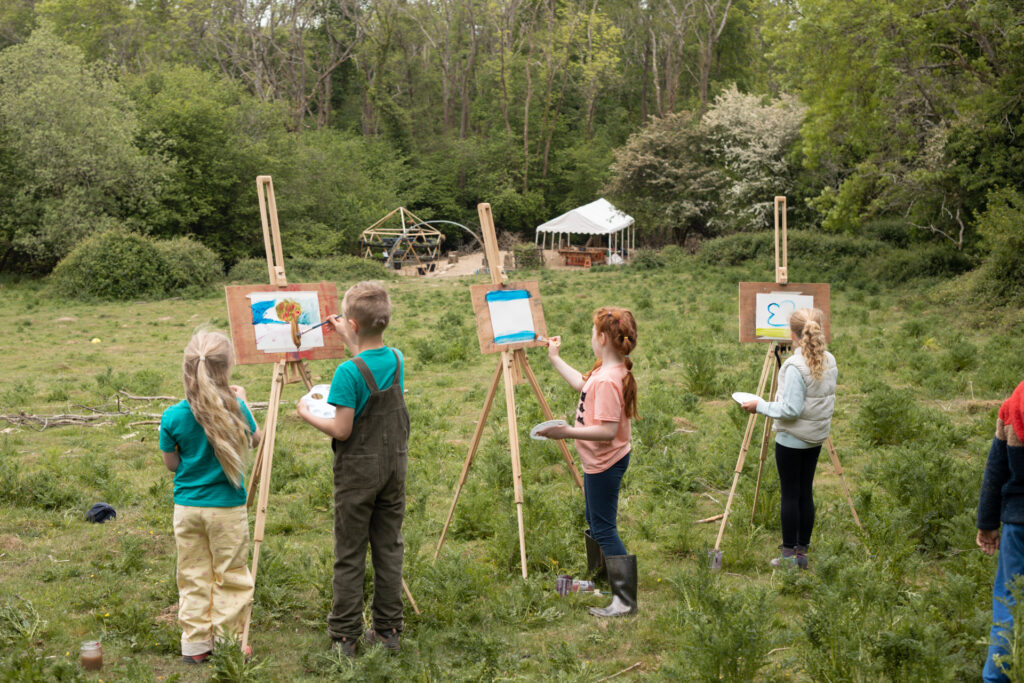
At Ambleford, learning is not confined to four walls. Our six-acre site becomes an extension of the classroom, offering children daily opportunities to explore, investigate, create and apply their learning within the real world.
Outdoor education at Ambleford is intentional and deeply connected to the curriculum. Children may use the landscape to support scientific inquiry, creative writing, mathematical thinking, practical problem-solving or collaborative project work. The environment becomes a living resource that encourages curiosity, resilience and independence.
Alongside academic development, learning beyond the classroom supports physical confidence, emotional wellbeing and a stronger connection to the natural world. Children learn to observe carefully, think critically, work practically and engage more fully with the world around them.
We believe some of the most meaningful learning happens when children are given space to move, explore, question and experience knowledge in purposeful and tangible ways.
A Different Rhythm of Childhood
Modern childhood often moves at extraordinary speed. Children are expected to transition constantly, absorb increasing amounts of information and adapt to environments that can feel busy, pressured and disconnected from real life.
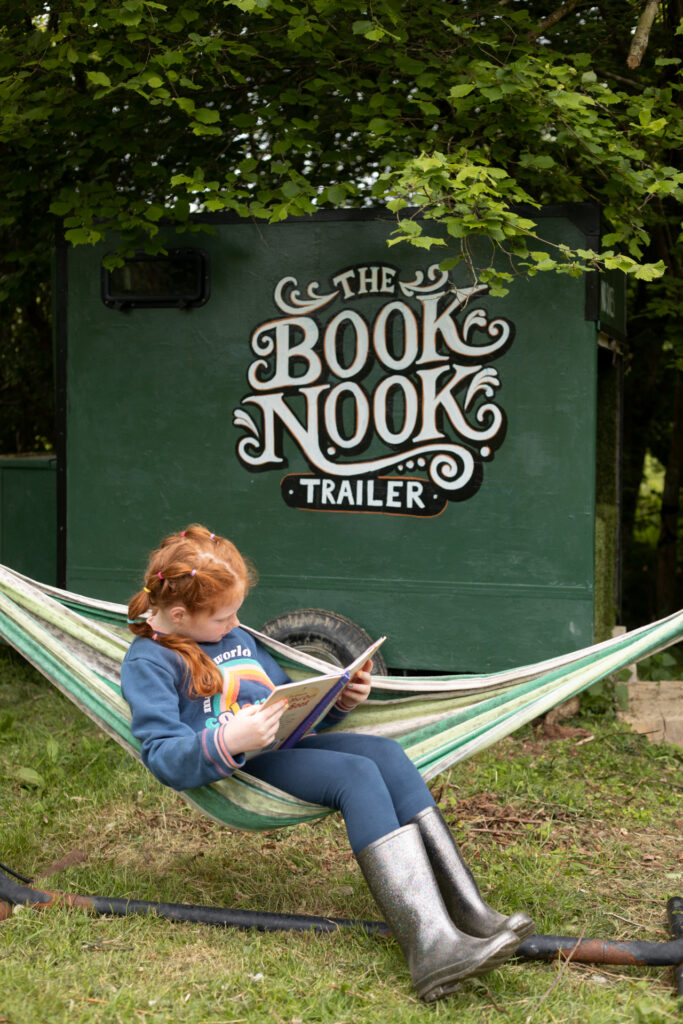
At Ambleford, we intentionally create a calmer rhythm — one that values depth over haste, connection over performance and meaningful engagement over constant acceleration.
This does not mean lowering expectations. In many ways, it allows children to achieve more. When children feel secure, known and emotionally grounded, they are better able to think deeply, take intellectual risks and develop genuine confidence in themselves as learners.
We believe childhood should leave space for curiosity, conversation, creativity, movement and reflection. These are not distractions from learning; they are essential foundations for it.
Community, Independence & Responsibility
At the heart of Ambleford is a close-knit learning community where children are encouraged to develop confidence, empathy and a strong sense of responsibility towards themselves and others.
Because our environment is intentionally small, relationships between children and adults are built on trust, consistency and mutual respect. Children learn not only how to work independently, but also how to contribute meaningfully to a wider community.
COMMUNITY
Children learn within a mixed-age environment where collaboration, communication and belonging are part of daily life. Strong relationships create emotional security and help children develop social confidence and empathy.
INDEPENDENCE
We encourage children to think for themselves, take ownership of their learning and develop confidence in their ideas, abilities and decision-making.
RESPONSIBILITY
Children are supported to understand their role within the community — caring for shared spaces, contributing positively to group life and developing respect for themselves, others and the environment around them.
The Best Way to Understand Ambleford Is to Experience It
Ambleford is difficult to fully understand through words alone. The feeling of the environment, the rhythm of the day and the quality of relationships are best experienced in person.
We warmly invite families to visit, explore the land and discover what education can become when childhood, community and meaningful learning are placed at the centre.