
Why Outdoor Schooling Offers a Rigorous Yet Child-Centred Alternative to Traditional Education
In recent years, outdoor schooling has grown in popularity as parents and educators search for alternatives to traditional classroom-based education. Often mistakenly perceived as less academically rigorous, outdoor schooling is proving to be not only equally challenging but also better aligned with children’s developmental, emotional, and cognitive needs. Leading educational thinkers argue that this model of education offers a dynamic and holistic way of learning that cultivates both academic excellence and well-being.
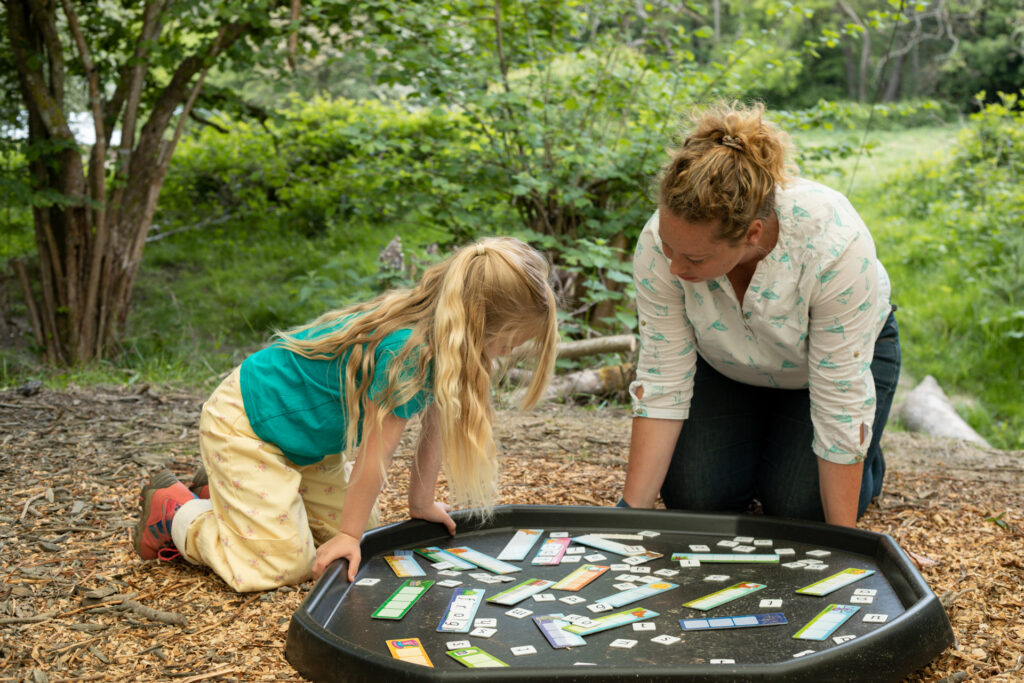
What is Outdoor Schooling?
Outdoor schooling is an educational approach that takes learning beyond the four walls of a classroom and into natural environments—forests, fields, gardens, and community spaces. Whether based on the Forest School ethos, Scandinavian Friluftsliv (open-air life), or other models, outdoor schooling is rooted in experiential learning, child-led exploration, and strong emotional development.
Rigorous Learning Outside the Classroom
Contrary to the myth that outdoor learning is “just play,” outdoor schooling can be academically rigorous while offering meaningful context for learning. Educational psychologist Dr. David Sobel, a pioneer in place-based education, emphasizes that “authentic learning happens when students are engaged in real-world experiences.” (Sobel, 2004). Whether estimating the height of a tree using trigonometry or conducting a scientific study on soil acidity, outdoor learning applies academic concepts in tangible ways.
The UK’s Forest School Association (FSA) supports this view, arguing that outdoor education enhances children’s ability to retain information, build resilience, and develop critical thinking—skills all essential for academic success. Their 2023 report states: “Forest School supports and enhances the national curriculum, enabling children to meet expected outcomes through active, hands-on experience.”
Meeting the Needs of the Whole Child
Perhaps one of outdoor schooling’s strongest assets is its capacity to address the whole child—intellectually, socially, physically, and emotionally. Sir Ken Robinson, an internationally respected authority on education, creativity and innovation, famously critiqued traditional schooling for “educating children out of their creative capacities.” Outdoor learning, by contrast, nurtures those capacities, encouraging problem-solving, imaginative thinking, and emotional regulation.
Research by Dr. Louise Chawla of the University of Colorado supports this, showing that children who learn in natural environments demonstrate improved self-discipline, reduced stress, and increased engagement in learning (Chawla, 2015). Outdoor schooling meets children where they are—curious, active, and deeply connected to their environment—thus creating more inclusive and responsive educational experiences.
Flexibility Without Compromise
One of the key advantages of outdoor schooling is its flexibility. Curriculum goals remain in place, but how they are reached becomes more adaptable to individual needs and learning styles. Children who struggle with conventional, sedentary learning often thrive when lessons involve movement, discovery, and sensory engagement.
Dr. Richard Louv, author of Last Child in the Woods, coined the term “nature deficit disorder” to describe the physical and mental toll that disconnection from nature is having on children. He argues that reconnecting children with the outdoors is not a luxury—it is a necessity for healthy brain development and academic achievement. Louv writes, “Time in nature is not leisure time; it’s an essential investment in our children’s health and education.” (Louv, 2008)
Policy Support and Recognition
Outdoor learning is increasingly recognised in formal education policy. In Scotland, Curriculum for Excellence encourages outdoor learning across all ages and subjects. The Welsh Government has also endorsed outdoor learning in its new Curriculum for Wales 2022, highlighting its role in fostering well-being and cross-curricular competence.
In England, Ofsted acknowledges the value of outdoor education, stating in their 2019 education inspection framework that a broad and balanced curriculum can and should include outdoor learning opportunities.
Final Thoughts
Outdoor schooling is not a retreat from academic standards—it is an evolution toward a more responsive and effective form of education. By integrating core curriculum with nature-based experiences, outdoor schooling prepares children not only for exams but for life.
As educators continue to explore how best to meet the needs of today’s learners, outdoor schooling offers a compelling model—one where rigour meets relevance, and children thrive both intellectually and emotionally.